A large share of confusion around Google Play payments forms even before a user reaches the checkout screen.
Expectations usually come from daily use of banking apps or UPI services, where money moves freely, and control stays mostly with the user. When the same expectations are applied to Google Play, the system starts to feel inconsistent or restrictive.
A Google Play payment exists inside a controlled digital environment operated by Google through Google Play.
This environment is designed for distributing digital content, not for transferring money between people or institutions. Once this difference becomes clear, many questions around balance usage, failed payments, and refund paths stop feeling confusing.
This first part focuses only on structure. The aim here is to explain what the Google Play payment ecosystem includes, how balance fits into it, and why the system behaves differently from financial apps.
What the Google Play Payment Ecosystem Actually Includes
A Google Play payment does not refer to a single transaction type. It refers to a complete internal system that processes every paid interaction inside the Play Store environment. This includes digital items and services distributed directly through Google Play.
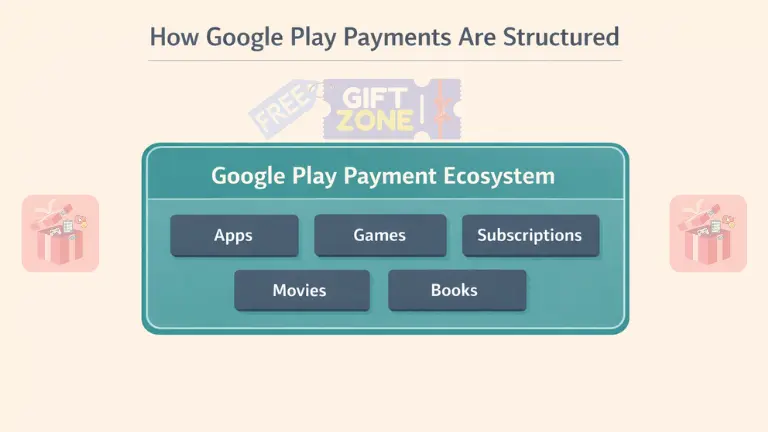
The ecosystem covers
- App purchases and paid downloads
- In-app items inside games and apps
- Recurring subscriptions
- Movies, books, and other digital media
Every one of these transactions passes through the same internal payment layer. External banks or card networks do not communicate directly with developers. Instead, Google Play sits in the middle and controls validation, deduction, and confirmation.
This centralized structure explains why Google Play can apply uniform rules across different content types.
How Google Play Payments Differ From Banking and Wallet Systems
A banking or wallet system exists to move money between accounts that belong to different institutions or individuals. The main control largely remains with the user, and money can usually move out as easily as it moves in.
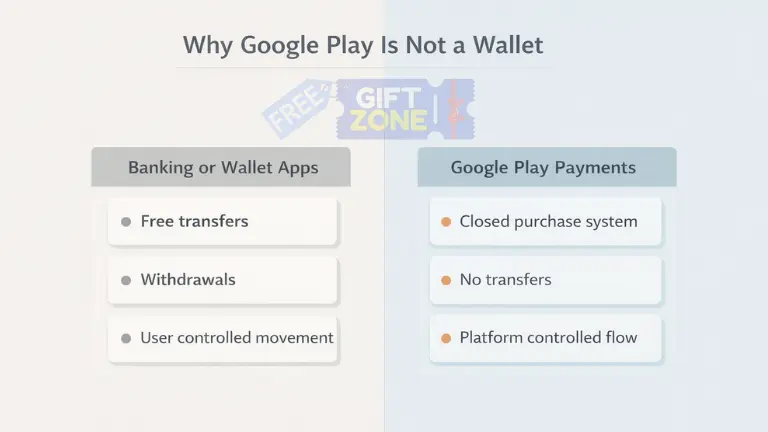
Google Play works differently. Money that enters Google Play does not stay as open money. It becomes part of a closed purchase environment that exists only to buy eligible digital content.
Key differences become easier to see when placed side by side.
| Aspect | Banking or Wallet Apps | Google Play Payments |
|---|---|---|
| Purpose | Transfer and store money | Purchase digital content |
| Money movement | Free movement in and out | Restricted to the Play Store |
| Transfers | Supported by users | Not supported |
| Withdrawals | Common | Not supported |
| Refund flow | Direct to source | Routed through the platform |
This difference explains why Google Play balance behaves the way it does and why familiar financial logic does not apply.
What Google Play Balance Represents Inside the System
Google Play balance represents stored purchase credit inside the account. This credit may enter the account through several paths, but once it enters, the system treats it the same way.
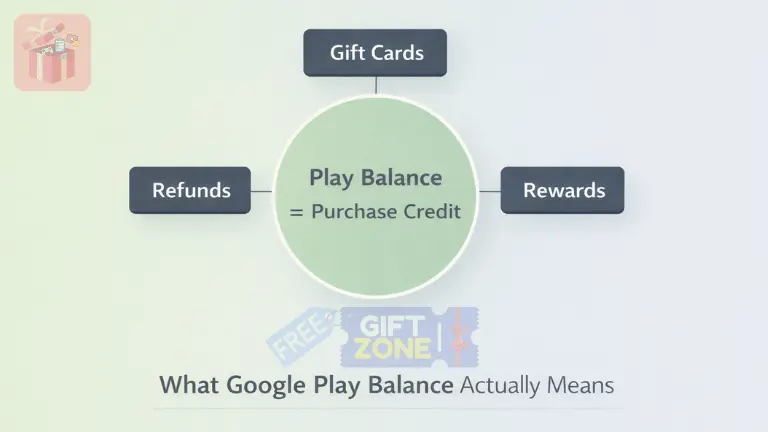
Common sources of balance include
- gift card redemption
- refunds from Play Store purchases
- reward systems that issue Play credit
Regardless of the source, the balance does not behave like wallet money. It represents permission to buy eligible content inside Google Play, not ownership of transferable funds.
This is why balance usage depends on more than the amount shown on screen.
Where Google Play Balance Is Stored
The balance exists inside the Google Play account ledger. This ledger acts as the single reference point for all credit entries, deductions, and refunds. Devices, emails, and gift cards do not store a balance after redemption.
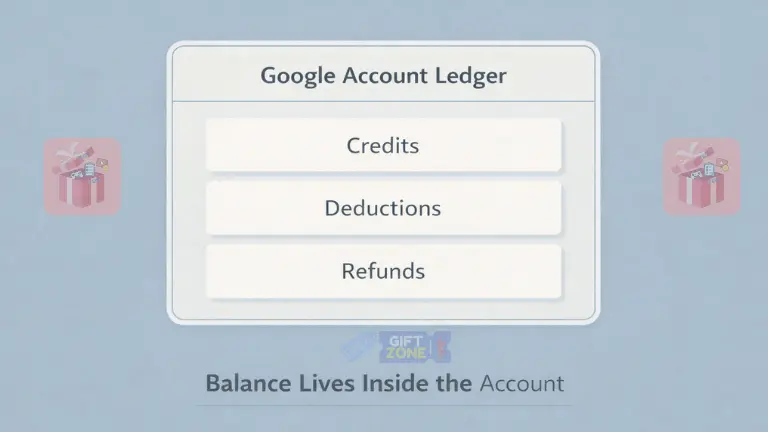
This design creates two important outcomes
- Loss of a card or email does not remove the balance
- Account access matters more than physical proof
Once the balance enters the account, that account becomes the only place where the credit exists.
Why Balance Always Stays Separate Between Accounts
An account keeps its balance separate inside Google Play, and this separation does not change under any normal circumstances. Balance from one account does not merge with another, even if the same payment method appears on both.
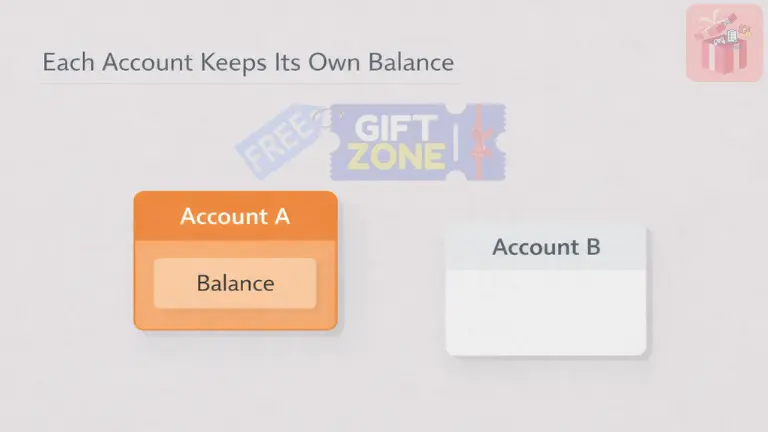
This separation exists for several reasons
- Protection against misuse
- Clear tracking of purchase history
- Consistent enforcement of platform rules
Each account carries its own balance record and transaction history. Once credit enters an account, it stays there.
How Different Payment Methods Fit Into One System
Google Play supports several payment sources, but all of them feed into the same internal decision process.
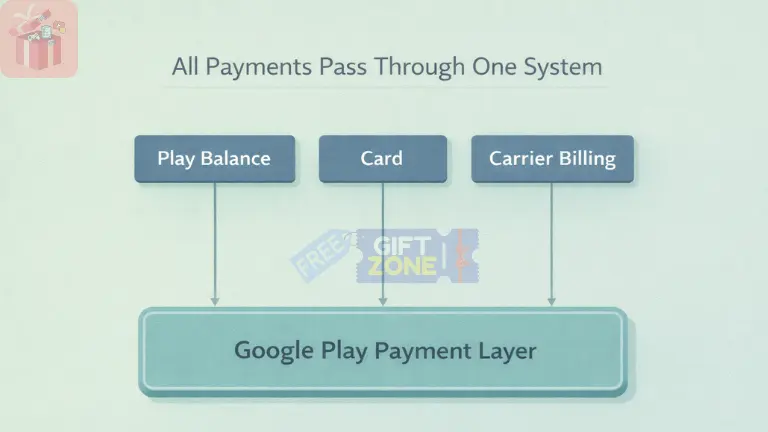
The main payment sources include
- Google Play balance as internal credit
- debit and credit cards as external sources
- bank-linked methods were supported
- carrier billing in selected regions
Balance already sits inside the ecosystem. Other methods connect only during checkout. Regardless of the source, Google Play decides how and when each method applies.
This explains why payment behavior stays consistent across different methods.
Why Understanding Structure Matters Before Payment Flow
Most frustration appears when users skip structural understanding and focus only on outcomes such as failed payments or unused balance. Without clarity on how the system is arranged, those outcomes feel random.
Once the structure becomes clear, payment behavior appears logical rather than unpredictable. Balance usage, limits, and refund paths start to look like consequences of design rather than errors.
This foundation prepares you to understand payment flow, restrictions, and failures in the next part.
If redemption errors keep appearing, it may help to review the full breakdown of common user mistakes and system checks during code entry. You can read the complete analysis here: Google Play Gift Card Redemption Errors Explained
How a Google Play Payment Moves Through the System
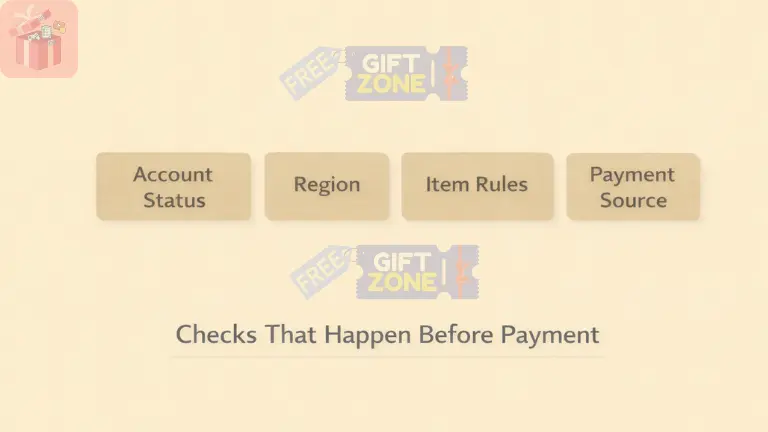
A Google Play payment does not begin at the moment you tap the buy button. The process starts earlier, when the system checks whether the account, the item, and the payment source all fit together under current platform conditions. Only after every internal check passes does the system move toward deduction.
A payment follows a structured path that remains consistent across apps, subscriptions, and media purchases, which is why similar issues repeat across different items instead of appearing random.
A typical internal flow includes
- An account status check to confirm normal access
- A region check to confirm item availability
- An item eligibility check based on publisher rules
- A payment source check for balance and backup methods
If any one of these checks fails, the payment stops before the money moves.
Questions about Google Play gift cards often appear during actual usage rather than at redemption. A separate article that focuses on usage patterns and common misconceptions around Google Play gift cards and Google Play balance explains where expectations usually drift away from platform rules and why balance behaves differently in real scenarios.
Why Balance Presence Alone Does Not Guarantee Payment
A visible balance generally creates the expectation that payment should succeed automatically. That expectation does not match how the system works. Balance amount is only one condition, not the final decision point.
Other conditions matter just as much
- item permissions set by the publisher
- subscription rules tied to renewal cycles
- region limitations for certain content
- account history and compliance state
This explains why a balance may remain untouched even when it appears sufficient.
Balance Eligibility Versus Balance Amount
A clearer way to understand payment behavior is to separate the balance amount from the balance eligibility. The system checks both before allowing a deduction.
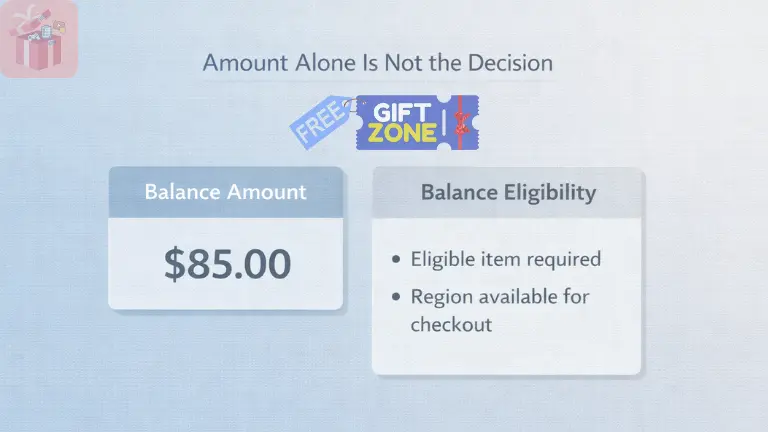
| Aspect | What It Means |
|---|---|
| Balance amount | The total credit visible in the account |
| Balance eligibility | Whether that credit may be used for a specific item |
A high balance does not override eligibility limits. Eligibility always comes first.
Many readers eventually look for a broader picture that explains how free Google Play gift cards are sourced, what methods exist online, and which expectations remain realistic over time. A separate long-form guide on earning free Google Play gift cards through structured platforms and reward systems brings those pieces together without mixing system rules with redemption steps.
Payment Method Priority and Why It Exists
A consistent deduction order exists inside Google Play to reduce confusion and prevent unnecessary external charges. Balance sits at the top of this order because it already exists inside the system.
The typical priority follows this sequence
- Google Play balance
- Selected card or bank method
- Carrier billing, where available
Manual control over this order does not exist because automated handling reduces misuse and payment disputes.
Partial Payments and Split Deductions
A split deduction happens when the balance covers only part of a purchase. In such cases, the system deducts the available balance first and then charges the remaining amount to the backup payment method.
This process happens internally without user input. The checkout screen shows the final result, not the calculation behind it.
Online platforms that offer digital rewards usually do not generate gift card codes themselves. Instead, they purchase inventory from authorized sellers and then distribute those codes after certain participation conditions are completed. If you want to understand the entire process from advertiser funding to final reward delivery, you can read our detailed explanation on how Google Play gift cards are distributed by online platforms.
Subscriptions and Recurring Payment Behavior
A subscription behaves differently from a one-time purchase because renewal depends on the future availability of funds. Balance may start a subscription when the full amount exists at the beginning.
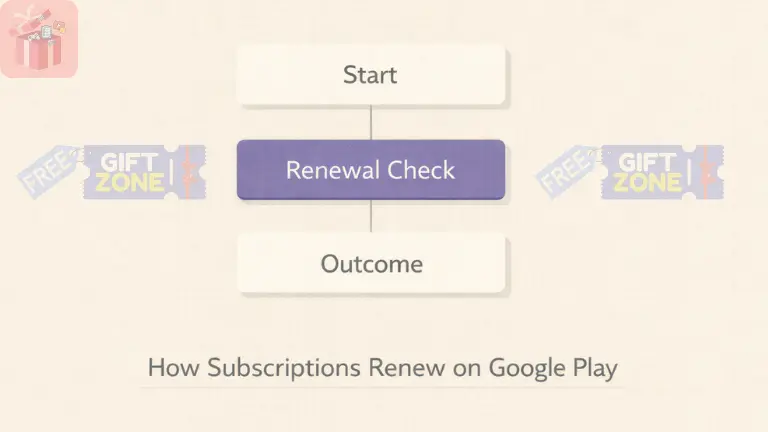
Renewal depends on conditions such as
- Balance sufficiency at renewal time
- Backup payment method presence
- Subscription-specific rules
If these conditions fail, renewal does not proceed.
What Happens When Balance Runs Out During a Subscription
A subscription does not renew partially. When the balance cannot cover the full renewal amount, and no backup method exists, the subscription may pause or be canceled.
This behavior protects users from unexpected partial charges and keeps subscription billing predictable.
Refund Handling Inside Google Play
A refund does not reverse instantly because verification happens before the credit returns. The system checks purchase conditions, usage status, and refund eligibility before approval.
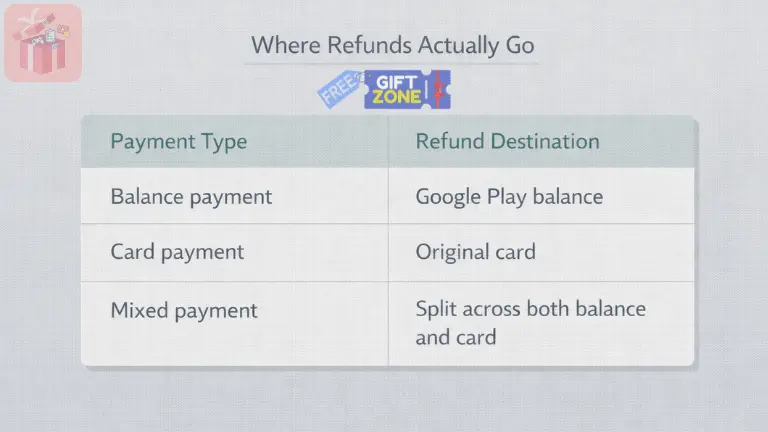
Refund destination depends on how the original payment occurred. Time gaps reflect processing stages, not loss.
| Original Payment | Refund Destination |
|---|---|
| Play balance only | Play balance |
| Card or bank only | Original method |
| Mixed payment | Split across sources |
Region and Compliance Effects on Payments
A payment system changes by country because legal and licensing differences exist across regions. These differences affect which payment methods appear and which items accept balance.
A balance does not convert between regions. The credit stays tied to the environment under which it entered the account, even after region changes.
Controls, Restrictions, and Enforcement Effects
A set of strict controls exists to protect digital marketplaces from misuse. These controls affect payment access rather than balance visibility in many cases.
Two broad enforcement situations exist
- temporary restrictions that limit usage
- permanent actions that block transactions
Resolution depends on account review outcomes.
Many gift card questions appear weeks or months after redemption, when balance behavior or region limits become visible. A separate post that explains expiry rules, region restrictions, and how Google Play balance behaves over time connects these issues and explains why they occur under platform policy rather than user error.
Why Error Messages Feel Vague
A generic message reduces the chance of misuse by hiding internal checks. You do not see detailed explanations because exposing system logic would make abuse easier.
A support team works with limited options in these cases. You face this limitation because most payment decisions happen automatically inside the system rather than through manual review.
How to Interpret Payment Problems Correctly
A clearer mental model reduces frustration. Google Play payments behave as controlled digital transactions, not flexible money transfers.
When expectations match system structure, payment outcomes feel consistent rather than unpredictable.
Frequently Asked Questions
Why does a payment fail even when the balance appears sufficient?
A visible balance does not guarantee eligibility for every item. Item rules, region limits, or subscription conditions may block usage even with enough credit.
Can balance cover part of a subscription renewal?
A subscription requires full coverage at renewal time. Partial balance does not trigger renewal without a backup payment method.
Why do refunds take time to appear?
Verification and approval happen before credit returns. Processing time reflects internal checks rather than refund denial.
Does a region change fix payment failures?
A region change affects future availability only. Existing balance and item eligibility remain tied to earlier conditions.
Why does support not override payment blocks?
Most decisions occur automatically to prevent misuse. Manual overrides remain limited to maintain system integrity.